


Have you ever wondered what actually happens when you press the start button on an electric mower? Unlike their gas-guzzling counterparts, these machines rely on a fascinating interplay of magnets, currents, and instant torque to deliver a silent, powerful cut.
While they are celebrated for being eco-friendly and low-maintenance, understanding the mechanics under the hood - from the electric motor to the power delivery system - is the key to maximizing their performance and lifespan. In this article, we’ll dismantle the mystery and dive deep into the inner workings of how electric lawn mowers truly operate.
How Electric Lawn Mowers Work

Electric Motors
When you engage the start mechanism, the electric motor receives power from either the battery pack or the electrical outlet. The motor then converts this electrical energy into high-speed rotational motion. This rotation spins the vertical shaft, which extends down through the mower deck and connects directly to the mower blade, propelling it at speeds high enough to slice cleanly through grass.
Visualizing the Mechanics: To see the components that make up this vertical stack, view this exploded diagram of the Black & Decker MM2000. You can trace the path from the Electric Motor (housed beneath the Motor Cover, Part 76) down through the shaft to the Blade (Part 42).
Source: Black & Decker
Power Source
There are two ways to power electric lawn mowers.
1. Powering Through an Electrical Outlet: A power cord is required to connect certain electric mowers to an electrical outlet. If you have a small to medium-sized lawn and an outlet nearby, this is an excellent option. You won't have any interruptions while mowing your lawn since the cord supplies continuous power.
2. Runs on a Rechargeable Battery: Battery-powered mowers offer the ultimate convenience: freedom of movement without being tethered by a cord. Simply charge the battery, click it into place, and you are ready to mow. This makes them ideal for medium-to-large yards where electrical outlets are scarce. However, for larger properties, you may need to keep a spare battery on hand to finish the job in one go.
Understanding Energy Consumption: When choosing your power source, it helps to understand the energy demands.
- Corded Electric Mowers: These typically consume between 700 to 1,800 watts of electricity per hour, providing consistent, high-level power for tough jobs.
- Cordless Electric Mowers: While generally efficient, charging a 40-90 volt battery requires approximately 600-1,400 watts, depending on the amperage.
Source: Constar Blue
Why Capacity Matters: The capacity of your power source directly impacts performance. A higher voltage rating (on a corded model) or a higher amp-hour (Ah) battery will provide more runtime and torque. This extra power is essential if you plan to tackle thicker grass or rougher terrain. Selecting the right power source ensures you have the efficiency and muscle needed for a top-tier cut.
Blades and Cutting Mechanism
The cutting system in electric lawn mowers relies on more than just a sharp edge; it uses aerodynamics to ensure a precise trim. Let's get a closer look at how the blades and cutting mechanism function.
Design and Rotation of Blades for Effective Grass Cutting
Electric mower blades are typically made from heat-treated, low-carbon alloy steel to withstand high-speed impacts. Unlike scissors, these blades rely on speed and impact to cut. They rotate horizontally at high speeds (often 3,000+ RPM). Key to their design is the curved edge (or "lift") on the back of the blade. As it spins, this shape creates an upward air current - like a helicopter - that pulls the grass blades upright just before the sharp edge slices them. This ensures an even cut rather than a ragged one.
Cutting Height and Deck Engagement
When you start the mower, the electric motor delivers instant torque to spin the blade. The blade is housed within a cutting deck that serves two purposes: directing airflow for mulching or bagging, and acting as a safety shield. To customize the length of your grass, you use the mower`s height adjustment levers. Note: this mechanism typically raises or lowers the wheels or the entire deck, not the blade itself. This ensures the blade stays perfectly parallel to the ground at your desired height, preventing it from "scalping" or digging into the soil.
Adjusting the blades can give your lawn a personalized look and the perfect grass height.
Safety Features
Safety is a top priority for electric lawn mowers. Different safety features are present in these machines to protect you and prevent accidents. Here are some of the primary safety features present in electric lawn mowers:
- Blade Brakes: Blade brakes on electric mowers halt cutting blades quickly when necessary. This feature is essential to prevent injuries and enable you to navigate around obstacles or adjust without spinning blades.
- Safety Switches: To operate electric lawn mowers, engage safety switches. The switches prevent accidental starts and give you control of the mower.
- Automatic Shut-Offs: The automatic shut-off is a crucial safety feature in electric mowers. The mowers shut off automatically in certain situations (for instance, tipping over or handle release). This feature adds an extra layer of protection and helps prevent accidents.
Safety comes first when using power tools or machinery!
How to Use an Electric Lawn Mower: Controls and Operation

Operating an electric lawn mower efficiently requires mastering its controls. The controls comprise the on/off switch, speed settings, and height adjustments.
- On/Off Switch: An on/off switch is a standard feature on all electric lawn mowers, making it simple for you to start and stop the machine. Look for the switch on the handle or control panel of the mower. Power up the machine and start mowing with the on/off switch.
- Speed Settings: Electric mowers may have variable speed settings to suit your preferences. The speed settings control how fast the cutting blades spin and how well the mower cuts. Adjust speed for grass thickness or terrain delicacy.
- Height Adjustments: Models have adjustable height settings for the cutting deck. Height change gives you control over grass length for a precise cut.
Make use of these controls to operate your electric lawn mower efficiently.
Maintenance and Care
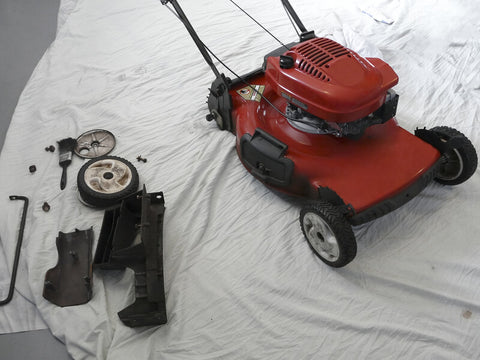
Maintaining and caring for your electric lawn mower is crucial for its longevity and optimal performance. While electric mowers are simpler than gas models, they still require attention to their key components. For a complete breakdown of maintenance needs, including why you never need oil, read our guide: Do Electric Mowers Need Oil?
Follow these steps to maintain your mower for years.
Regular Blade Sharpening or Replacement
A sharp blade is essential for a clean cut and reducing motor strain. Electric mowers use standard rotary blades that should be inspected regularly. If the blade is dull, it can be sharpened or replaced to restore efficiency.
Battery Maintenance
The battery is the heart of your cordless mower. To ensure a long lifespan, keep connections clean and store the battery in a cool, dry place. Always follow the manufacturer's specific charging guidelines.
Cleaning
Regular cleaning prevents grass clippings from clogging the air vents and cooling fins, which are vital for keeping the electric motor from overheating. Simply clearing debris from the deck and vents after use will keep your machine running smoothly.
Environmental Impact

Electric lawn mowers' popularity has risen because of their commitment to zero emissions and eco-friendliness. By picking an electric mower, you immediately contribute to a cleaner, quieter community through three key factors:
1. Zero Emissions and Reduced Hazardous Waste
Electric mowers are pollution-free, thanks to their electric power source. This eliminates the need for gasoline storage and oil changes, reducing environmental risks. You can better the air quality and reduce your carbon footprint, as electric mowers are a greener option that doesn't contribute to smog formation.
- Energy Efficiency: Electric motors convert more electrical energy into mechanical energy, resulting in less waste.
2. Significant Noise Reduction
Using electric mowers reduces noise pollution. This is important in residential areas or in noise-sensitive communities, making yard work more pleasant for everyone.
3. Safety and Cleanliness
Electric mowers eliminate the need for gasoline storage and handling. This is a significant safety benefit, as gasoline spills can contaminate soil and water, causing pollution. This cleanliness extends to maintenance, as the lack of oil also minimizes hazardous waste.
Advancements in Electric Mower Technology

Advancements in technology have improved electric lawn mowers over the years. Let's explore some new electric mower innovations.
Brushed vs. Brushless Motors
One of the biggest leaps in efficiency is the shift to brushless motors. Unlike older "brushed" motors that use physical carbon brushes to transfer electricity (creating friction and heat), brushless motors use magnets and electronic circuits. This results in a mower that runs cooler, has more torque for thick grass, and lasts significantly longer without wearing out.
Improvements in Battery Technology
High-performance lithium-ion batteries are a significant advancement in electric mower technology. These batteries have longer run times and faster charging than lead-acid batteries. Electric mowers can now operate for longer periods without frequent recharging.
Self-Propelled Features
Self-propelled features are another enhancement in electric mowers. If you are wondering what a self-propelled mower is, it is a system where the motor powers the wheels to move the unit forward automatically. This technology makes mowing significantly easier on larger or hilly lawns by reducing the physical effort required to push the machine.
Other Innovative Advancements
Electric mowers have seen remarkable innovations beyond batteries and self-propulsion. Models with smart sensors adjust cutting height for grass thickness. Improved blade design enhances mulching and bagging, allowing for better grass management.
Manufacturers frequently release new models with better features and performance.
Stay updated to be aware of the latest electric mower technologies.
And Wrapping Up!
In this article, you learned about how electric lawn mowers work. Let's recap:
- Motor: Powered by efficient electric motors (brushed or brushless).
- Power: Flexible options with corded or battery-operated models.
- Cutting: Precise rotary blades with adjustable deck heights.
- Safety: Advanced features like blade brakes and automatic shut-offs.
- Simplicity: User-friendly controls and push-button starts.
- Eco-Friendly: Zero emissions and significantly reduced noise pollution.
Explore electric lawn mowers further. They are a great choice for lawn maintenance.
What`s your take on electric lawn mowers?
