


A lawn mower is engineered to cut large, open areas of grass to a uniform height quickly, while a grass trimmer provides the precision needed to edge along fences, trees, and sidewalks. For a professional-grade yard in 2026, you typically need both tools—or an integrated attachment like Trimyxs that combines them into one seamless operation on your walk-behind push mower.
Every homeowner wants a pristine yard, but the secret to efficiency lies in knowing exactly where your mower’s capabilities end and where your trimmer’s precision must take over. In 2026, the focus has shifted from simply owning the right tools to eliminating the "double-pass" fatigue that turns a quick mow into a weekend-long chore.
• The Efficiency Gap: Traditional lawn care requires two separate passes, leading to "double-pass fatigue." Combining these tasks is the primary way to save time in 2026.
• Maintenance for Quality: Sharp mower blades and fresh trimmer line are non-negotiable for a professional finish; dull equipment tears grass and invites lawn disease.
• Integrated Solutions: Using a universal attachment like Trimyxs on a walk-behind push mower eliminates the need for a secondary handheld trimmer, cutting yard work time by up to 50%.
Lawn Mower vs. String Trimmer—At a Glance
| Lawn Mower | String Trimmer |
| Function: Cuts large, open areas | Function: Tackles edges and details |
| Ideal for: Large lawns, landscaping | Ideal for: Edging, tight spaces |
| Maneuverability: Limited in tight spots | Maneuverability: Reaches anywhere |
| Power source: Gas or Electric | Power source: Gas or Electric |
| Maintenance: Blades and oil | Maintenance: String replacement |
| Cost: Higher investment | Cost: More budget-friendly |
Understanding the Core Differences
Every homeowner wants a pristine yard, but understanding the exact capabilities of your tools is essential for efficient lawn care. While both tools cut grass, their mechanisms, applications, and results are vastly different.
The Walk-Behind Push Mower
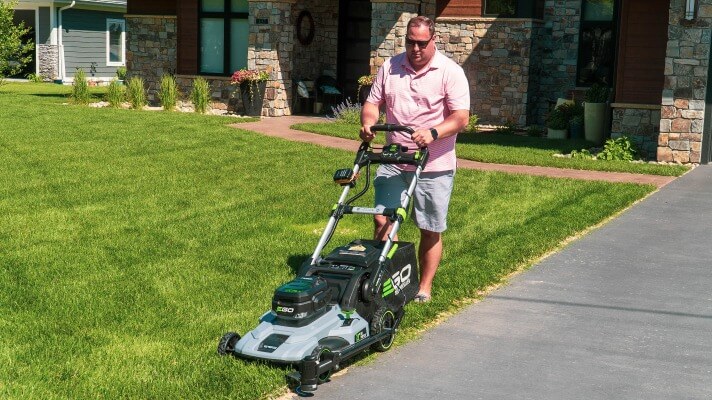
The traditional push mower is the workhorse of your garage. These machines excel at providing an even, carpet-like cut across your entire yard, primarily designed for maintaining larger lawns and open landscaping. Their adjustable cutting heights allow you to power through thicker grass easily, ensuring that professional finish every time you mow.
While lawn mowers can be heavy and represent a higher upfront investment than smaller tools, they are unmatched in efficiency. By covering more ground in less time, they make routine lawn maintenance significantly faster and more effective.
Operational Profile:
- Primary Use: Maintaining the overall height of the main lawn.
- Efficiency: Clears wide paths (typically 20 to 22 inches) in a single pass.
- Limitation: The mower deck prevents the blade from reaching right up to walls, fences, or garden beds.
The String Trimmer (Weed Eater)

The string trimmer is the precision instrument of your lawn care arsenal, designed to cut grass and weeds in areas a lawn mower simply cannot reach. By utilizing a rapidly spinning nylon line and centrifugal force, it provides the detailed finish required around patios, trees, decks, and fence lines.
Whether you choose a gas-powered model for raw power or a modern cordless electric version for quiet mobility, the trimmer’s strength is its maneuverability. You can maintain clean lines against structural barriers that would otherwise remain shaggy. However, relying on a handheld trimmer for the entire perimeter of a yard primarily causes "second-pass fatigue."
Operational Profile:
- Primary Use: Precision edging, detail work, and clearing tight spaces.
- Efficiency: Highly maneuverable around structural barriers and landscaping.
- Limitation: Inefficient for large areas; requires significant physical effort and a separate "second pass" after mowing.
Why Choose When You Can Combine?
For those who want to get the job done quickly without switching tools, the Trimyxs universal attachment bridges the gap between bulk mowing and precision trimming. Designed exclusively for walk-behind push mowers, the Trimyxs system mounts directly to your existing mower deck.
This allows you to achieve a neatly edged lawn in a single pass, streamlining your routine by eliminating the need to walk the yard a second time with a heavy handheld tool. It transforms your reliable push mower into a dual-action maintenance system.

Trimmer & Edger Push Mower Attachment (Trimyxs), 20V Battery & Charger
Weighing Maintenance Requirements
Maintaining your lawn equipment is essential for long-term performance, requiring a balance between blade sharpening for your mower and line replacement for your string trimmer. Regular upkeep ensures that your tools provide a clean cut rather than tearing the grass, which can lead to browning and disease.
- Lawn Mowers: Require regular blade sharpening or replacement to prevent tearing the grass. You will also need to monitor and change the oil to keep the engine running smoothly.
- Grass Trimmers: Primarily require line replacement as the nylon string wears down. While the upkeep is generally lower, checking for debris around the spindle is still important.
Assessing Durability and Value
When choosing between devices, assess the long-term value of your purchase. Consider how the durability of the tool matches your local environment—for instance, whether a trimmer is built to withstand your specific weather conditions or how much time you are willing to spend on daily maintenance. These factors will guide you toward the right decision for your home.
Wrapping Up!
Getting a great-looking lawn usually comes down to using the right tool for the specific job at hand. Mowers are your best bet for covering ground and keeping the grass level across large areas, while a trimmer handles the detail work that actually makes the yard look finished. Once you understand where each tool excels, you can stop guessing and start building a maintenance routine that actually fits your landscape.
